
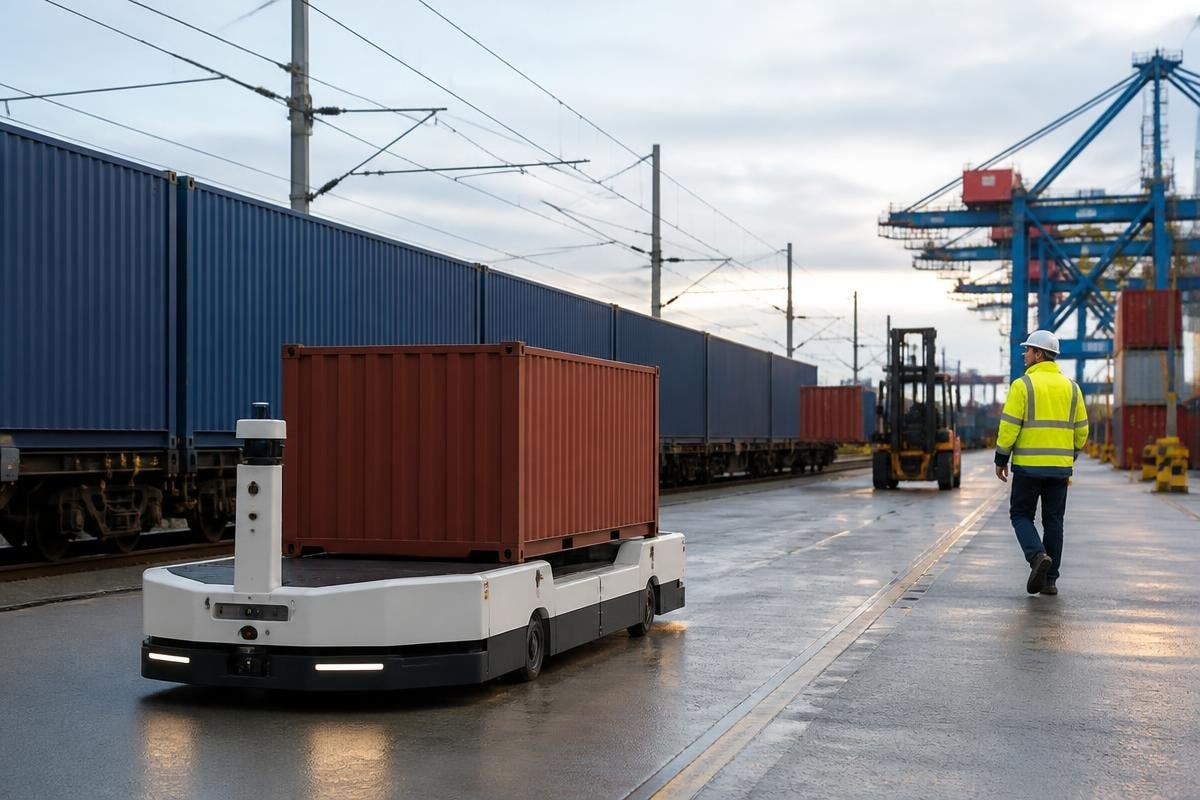
Ports, airports and railways all move heavy items through fixed routes, timed handoffs and restricted work zones. That makes them useful places for automation, provided the robot can handle people, weather, vehicles and delays without blocking the whole site.
Quick read
- Repeated transport work is the best fit for robots
- Sensors and route rules matter as much as the robot itself
- Human checks still matter when cargo, passengers or safety are involved
The work robots can handle
The strongest use cases start with repeated movement. An autonomous mobile robot can carry tools, parcels or parts between marked points, while an automated guided vehicle follows a set route between loading areas.
That changes the job around the machine. A worker may spend less time driving across a site and more time loading, checking and fixing exceptions. The gain depends on the route, the handoff time and the number of trips per shift.
Ports can use this model for container-yard movement, inspection rounds and equipment checks. Airports can apply it to baggage areas, cargo buildings and deliveries between secure zones.
Rail operators can use robots for depot transport, track inspection and work near rolling stock.
The robot still needs a clear task. “Move items around the site” is too broad for a safe project plan. A better brief names the load, route, handoff point, travel speed, stopping rule and person responsible when the route fails.
Sensors decide whether the route works
A robot in a transport site needs more than a motor and a map. LiDAR measures nearby objects with laser pulses, cameras read signs and markings, and wheel sensors help track movement when the floor or pavement changes.
The control system combines those readings to locate the robot and choose a safe path. Geofencing can limit travel to approved areas, while speed limits can change near doors, crossings or people. A blocked route should create a clear stop and an alert, not a silent delay.
That matters because ports, airports and rail depots rarely stay still. Vehicles park in new places. Pallets shift. Rain can affect cameras. A rail worker may enter an area that was empty when the robot made its map.
Before a port, airport, or rail depot puts a robot to work, Robot24.com robotics coverage can connect its task and operator role to reported site tests. That record leads into the handoff, where people and separate systems have to pass work between them.
The handoff is where projects struggle
Moving an item is only one part of the task. The robot must meet a person, vehicle, conveyor or storage system at the right place and time.
A baggage robot that reaches the loading area early may wait. One that arrives late can hold up a flight. In a port, a vehicle may need to pause while a crane moves above it. At a rail depot, a robot may need permission before it enters a service zone.
These cases call for clear interfaces. The site needs a way to send a job, confirm that the load arrived, report a fault and tell people what the robot will do next. A worker should see the robot’s state without opening a specialist tool.
This is also where safety rules become practical. Emergency stops, warning lights, marked routes and safe spaces around moving equipment need to match the site. A robot that works well in a quiet test area may need slower speeds and more checks in a live terminal.
What stays unproven
Automation can reduce repeated driving and inspection work, but it doesn’t remove the hard parts. Mixed traffic, poor weather, damaged goods and unusual loads still test the system.
Costs also reach beyond the robot. You may need charging points, network coverage, floor changes, software links, staff training and a plan for repairs. A small fleet can create a new workload if each fault needs a specialist visit.
I’d skip a project that starts with a robot purchase before anyone maps the route and counts the exceptions. The better starting point is a task with steady demand, known handoffs and a safe fallback when the system stops.
A practical site check
Use these questions before choosing equipment:
- Name the load: record its weight, size, shape and packaging
- Map the route: mark doors, crossings, slopes, lifts and shared traffic
- Count exceptions: measure blocked paths, failed handoffs and manual stops
- Set the fallback: assign the person and process for a stopped robot
- Check the link: confirm that fleet software can exchange job and fault data
- Price the site: include power, network work, training, service and spare parts
A project that passes this check has a task worth testing. The next step is a limited route with measured results: completed trips, stopped runs, handoff time and worker interventions. Those figures will show whether the robot belongs in a larger port, airport or railway operation.
